























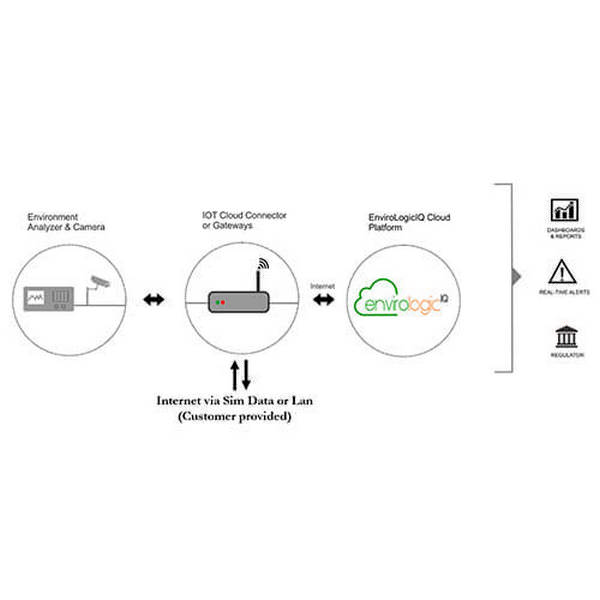
Remote calibration is the process of remotely triggering either zero or span calibration for a gas analyzer through a web portal. The remote calibration feature in the Uniphos CEMS not only enables access to the analyzer remotely but also assists in performing various activities like zeroing, calibration and validation of the analyzer remotely.

Remote Calibration
Remote Calibration
Description
Related products
FumiSense Pro PH3 – Hi (CO)
FumiSense Pro PH3 - Hi (CO)

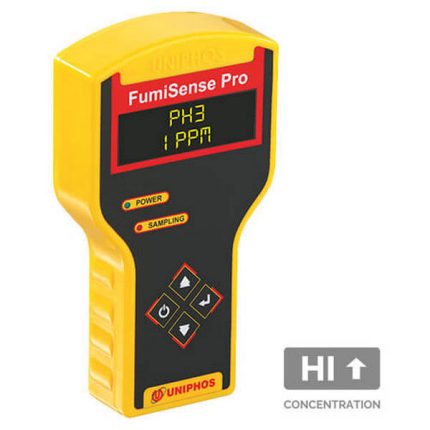
FumiSense Pro–Hi is a handheld gas monitor for phosphine concentration measurement when CO is present along with phosphine, like in tobacco fumigation. Equipped with an inbuilt air sampling pump capable of drawing a sample from a distance of 30m and a sensor capable of measuring PH3 up to 2000 ppm, it is the perfect tool for this application. The backlit OLED display enables the user to read the instrument display even in the dark. With user settable datalogging features, the device logs gas concentration values with date, time and location.
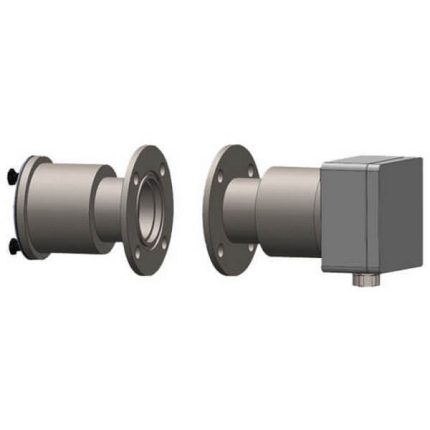
Stack/Duct Probe
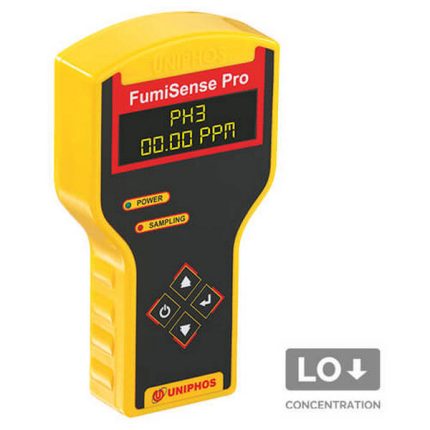
FumiSense Pro PH3 – Lo
FumiSense Pro PH3 - Lo
FumiSense Pro-Lo is a handheld Phosphine monitor for monitoring phosphine levels outside the fumigated stack/ silo/ ship to check for leaks and to ensure the level of PH3 is less than the TLV. Equipped with an inbuilt air sampling pump and with the ability to measure PH3 up to 20 ppm, it is the perfect tool for this application. The backlit OLED display enables the user to read the instrument display even in the dark. With user settable datalogging features, the device logs gas concentration values with date, time and location.
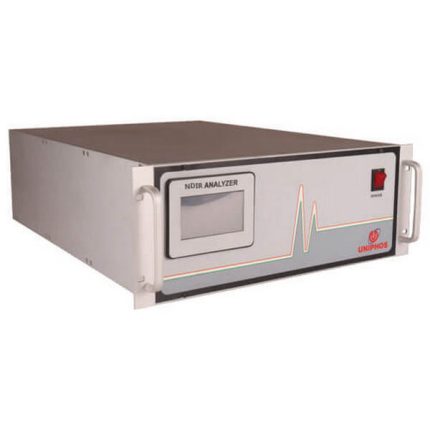
NDIR Stack Gas Analyzer
NDIR Stack Gas Analyzer
All diatomic and polyatomic molecules have one or several vibrational modes which can absorb radiation and give rise to a unique absorption spectrum in the infrared region with several absorption lines. Taking any one of the IR absorption lines of the target gas as its finger print, an instrument can be built for measurement of target gas concentration. Infrared technique is endowed with very high specificity when a right choice of the vibrational frequency of the target molecule is made. This technique is cost effective and reliable for measurement of gas concentration in parts per million range.
The Uniphos NDIR Stack Gas Analyzer are endowed with specificity and have adequate sensitivity for the detection of gases like SO2, NOx, CO, CO2 and CH4 in industrial stacks. The in-built powerful pump enables the analyzer to draw the sample from stack. Analyzer is equipped with the latest embedded and IOT technologies which enables the user to perform Remote calibration. This PLC based analyser incorporates all desired features which makes it user-friendly and fail safe.
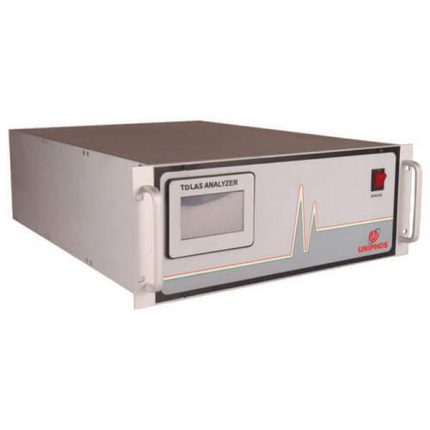
TDLAS Based Gas Analyser
TDLAS Based Gas Analyser
The TDLAS (Tunable Diode Laser Absorption Spectroscopy) technique in combination with WMS (wavelength modulation spectroscopy) is highly sensitive and specific method for detection of gases and is an excellent technique for concentration measurement of gaseous species in scientific as well as industrial applications. Uniphos TDLAS based gas analyzer are exceptionally reliable for trace level detection of atmospheric pollutants like HF, HCl, NH3 etc. Our TDLAS based analyser provides an accurate and real time measurements of these atmospheric pollutants from ppm levels to percentage levels.
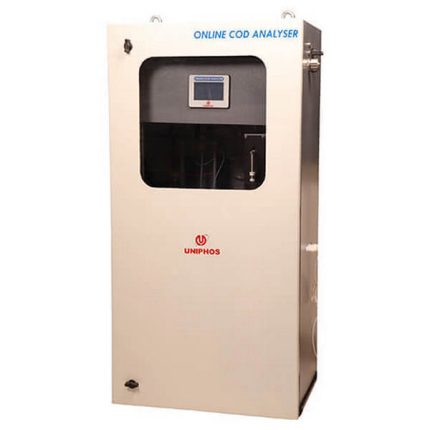
Uniphos Online COD Analyzer (Potentiometric Method)
Uniphos Online COD Analyzer
(Potentiometric Method)
Chemical Oxygen demand is defined as the amount of oxygen required for the oxidation of all the organic compounds present in a water sample.
The Uniphos online COD analyzer is a programmable, fully automatic analyzer which measures COD of waste / effluent water samples using a direct method of analysis. This direct method involves oxidation of sample by potassium dichromate and measurement by potentiometric titration. No human intervention is required during the measurement, as the analyzer is completely automated.
The inbuilt diagnostics feature gives an alarm if there are any faulty components or if the reagent level goes below the minimum level. Equipped with a next generation touchscreen HMI for display and programming, the analyzer provides a variety of data communication options such as RS-485 MODBUS and industry standard 4-20 mA analog output
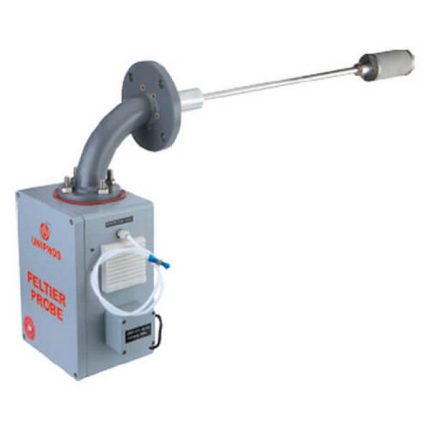
Peltier Based Sample Handling System
Peltier Based Sample Handling System
The Uniphos Peltier Cooled Probe is an advanced sample conditioning system to draw a gas sample from an emissions stack being monitored. Sample extraction and conditioning is an important part of all Continuous Emission Monitoring Systems (CEMS) and includes extracting the sample from the stack and maintaining the dew point of the sample at such a level that there is no condensation at any point until the concentration of the sample is measured. This ensures proper transport and measurement of sample concentrations.
The Peltier Cooled Probe is a unique product which is based on an advanced hot and dry extractive technique where the sample is extracted and conditioned on the stack and transported to the analyzer using a non-heated sampling tube at ambient temperature. It consists of a stack mountable system which includes a heated probe, a short, heated sampling line and a Peltier cooled sample conditioning module, all integrated in a single enclosure. Using a Peltier Cooled Probe reduces the length of the heated sampling line to less than half a meter, bringing down the operating cost many times.
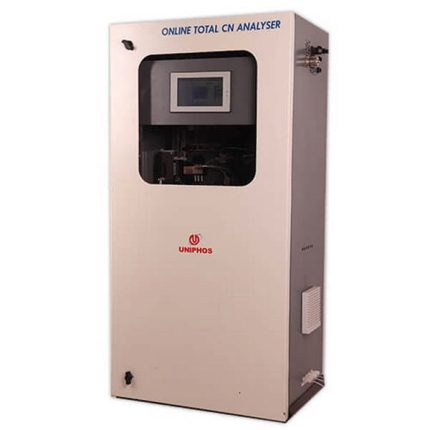
Uniphos Online Total Cyanide Analyzer
Uniphos Online Total Cyanide Analyzer
Total Cyanide in effluent water refers to the sum of all cyanide-containing compounds, including free/ weak acid as well as dissociable and strong metal cyanide complexes.
The Uniphos online Cyanide analyzer is a reliable, fully automatic analyzer designed to measure the total cyanide of waste / effluent water samples by an ASTM 7511-09 method. The ASTM 7511-09 method involves acid digestion with UV irradiation and determination of total cyanide by amperometric method. The amperometric technique used is demonstrated to be free of analytical interferences and eliminates the use of hazardous reagents. No human intervention is required during the measurement as the analyzer is completely automated.
The inbuilt diagnostics feature gives an alarm if there are any faulty components or if the reagent level goes below the minimum level. Equipped with a next generation touchscreen HMI for display and programming, the analyzer provides a variety of data communication options such as RS-485 MODBUS and industry standard 4-20 mA analog output