Codes such as A1B1E1K1-P3 and the colour bands on a filter show which gases it protects against, and classes such as FFP2 or FFP3 show the particle protection. This guide explains filter codes, particle classes, the selection order and the standards for respiratory devices with diagrams.
The letter is the gas group, the digit next to it the capacity class. P3 after the hyphen is the particle filter. Example: A1B1E1K1-P3.
- A1Organic gases and vapours
- B1Inorganic gases and vapours
- E1Sulphur dioxide, acid gases
- K1Ammonia
- P3Particle filter, highest class
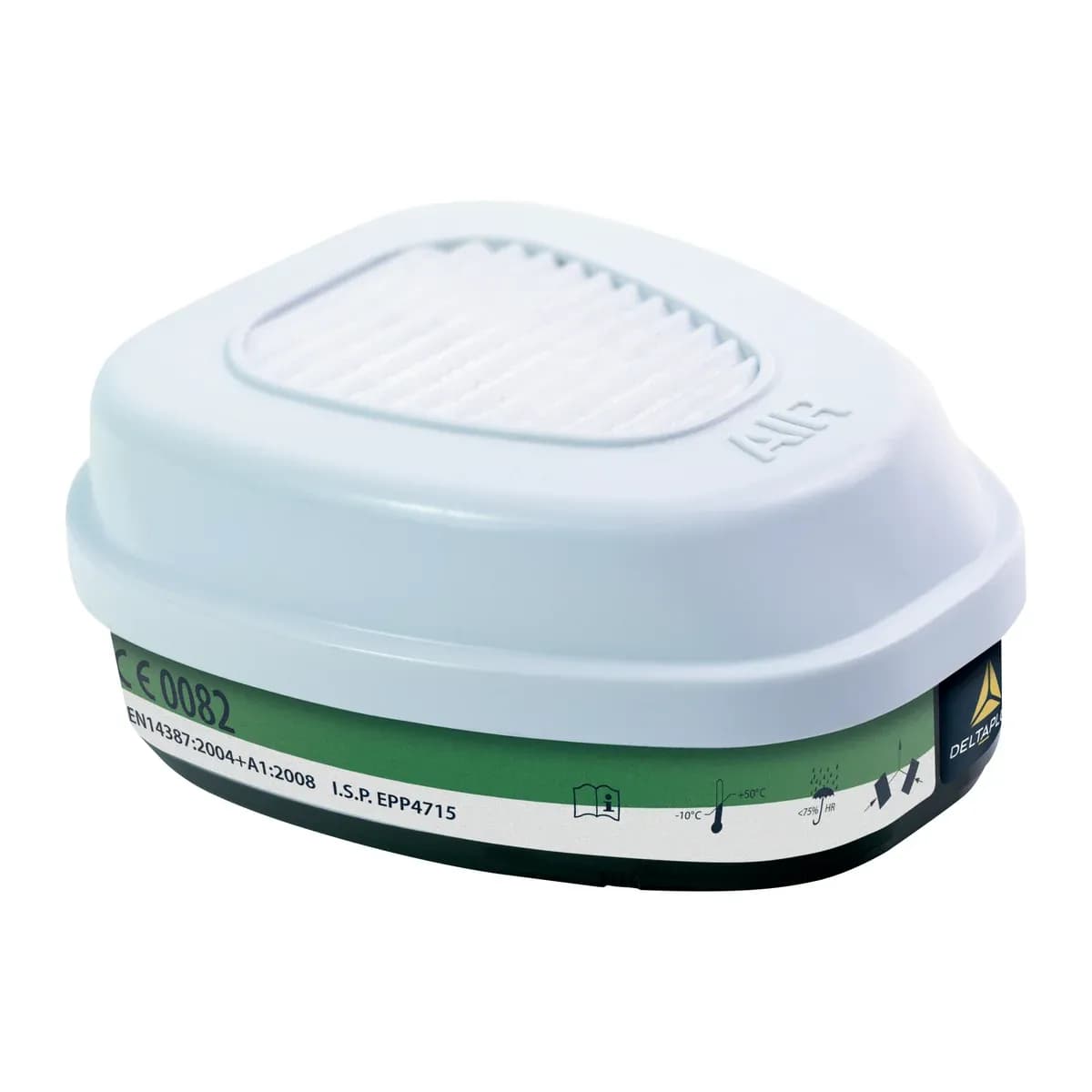
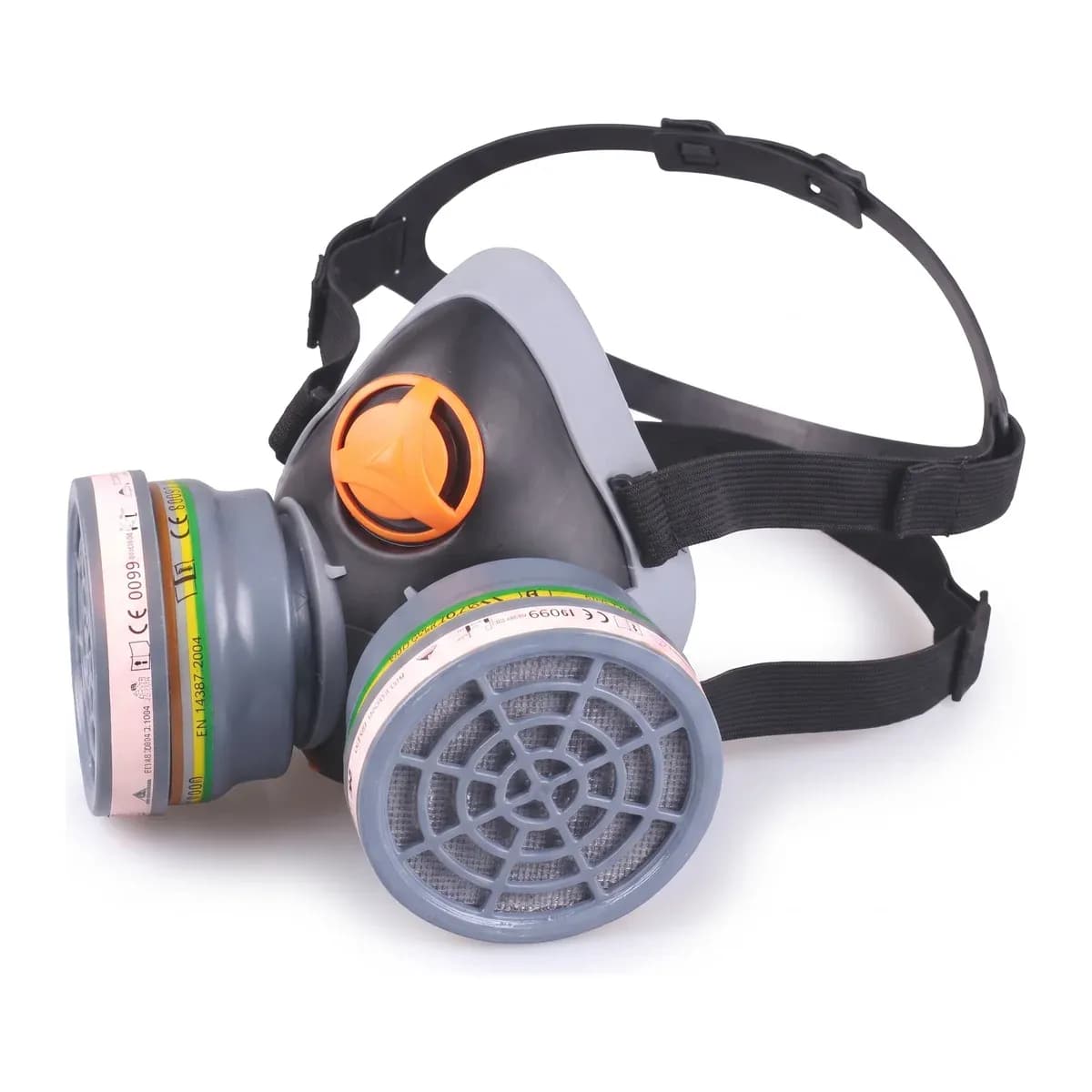 AI-editedExample productDelta Plus M6400 CHEM KIT
- ABrown: organic, boiling point > 65 °C
- AXBrown: organic, boiling point ≤ 65 °C; single use
- BGrey: inorganic (not carbon monoxide)
- EYellow: sulphur dioxide and acid gases
- KGreen: ammonia and derivatives
- Hg-P3Red-white: mercury vapour, max. 50 hours
- NO-P3Blue-white: nitrogen oxides; single use
- SXViolet: only the substance named by the maker
- PWhite: particles (dust, fume, mist)
For A, B, E and K, classes 1, 2 and 3 are for gas concentrations up to 0.1, 0.5 and 1.0 vol% in the 2004+A1:2008 edition. EN 14387:2021 changed the test capacities; check the maker’s data for current limits.
| Class | 1 | 2 | 3 |
|---|---|---|---|
| FFP mask, min. filtration (EN 149) | 80% | 94% | 99% |
| FFP mask, max. total inward leakage | 22% | 8% | 2% |
| P filter, min. filtration (EN 143) | 80% | 94% | 99.95% |
The 78%, 92% and 98% seen in some sources are not filtration but 100 minus total inward leakage. On masks NR means single shift and R reusable; D means the dolomite clogging test was passed (mandatory for R).
- O₂Could oxygen be deficient? Then filters are useless; use breathing apparatus only
- P · A · B …Is the contaminant particle, gas or both? Choose the filter type accordingly
- 1 · 2 · 3Concentration and duration: filter class and mask type (half or full face)
- COThere is no work filter for carbon monoxide; only escape devices (EN 403, EN 404)
- EN 149Filtering half masks (FFP1, FFP2, FFP3)
- EN 140Half and quarter masks
- EN 136Full face masks; classes 1–3. Industry at least class 2, firefighting class 3
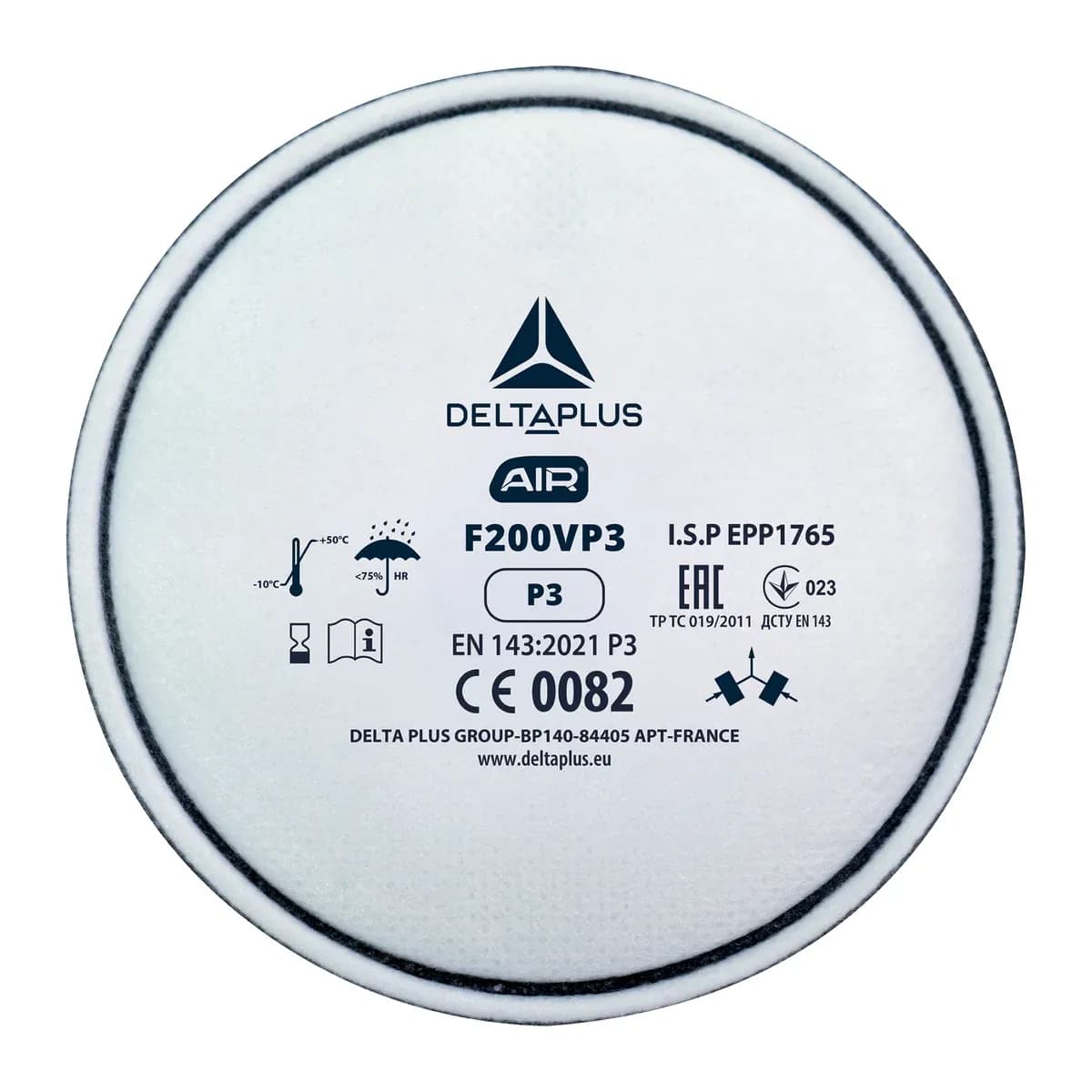
- EN 143Particle filters (P1, P2, P3)
- EN 14387Gas and combined filters
- EN 12941Powered filtering hoods and helmets (TH1–TH3)
- EN 12942Powered filtering masks (TM1–TM3)
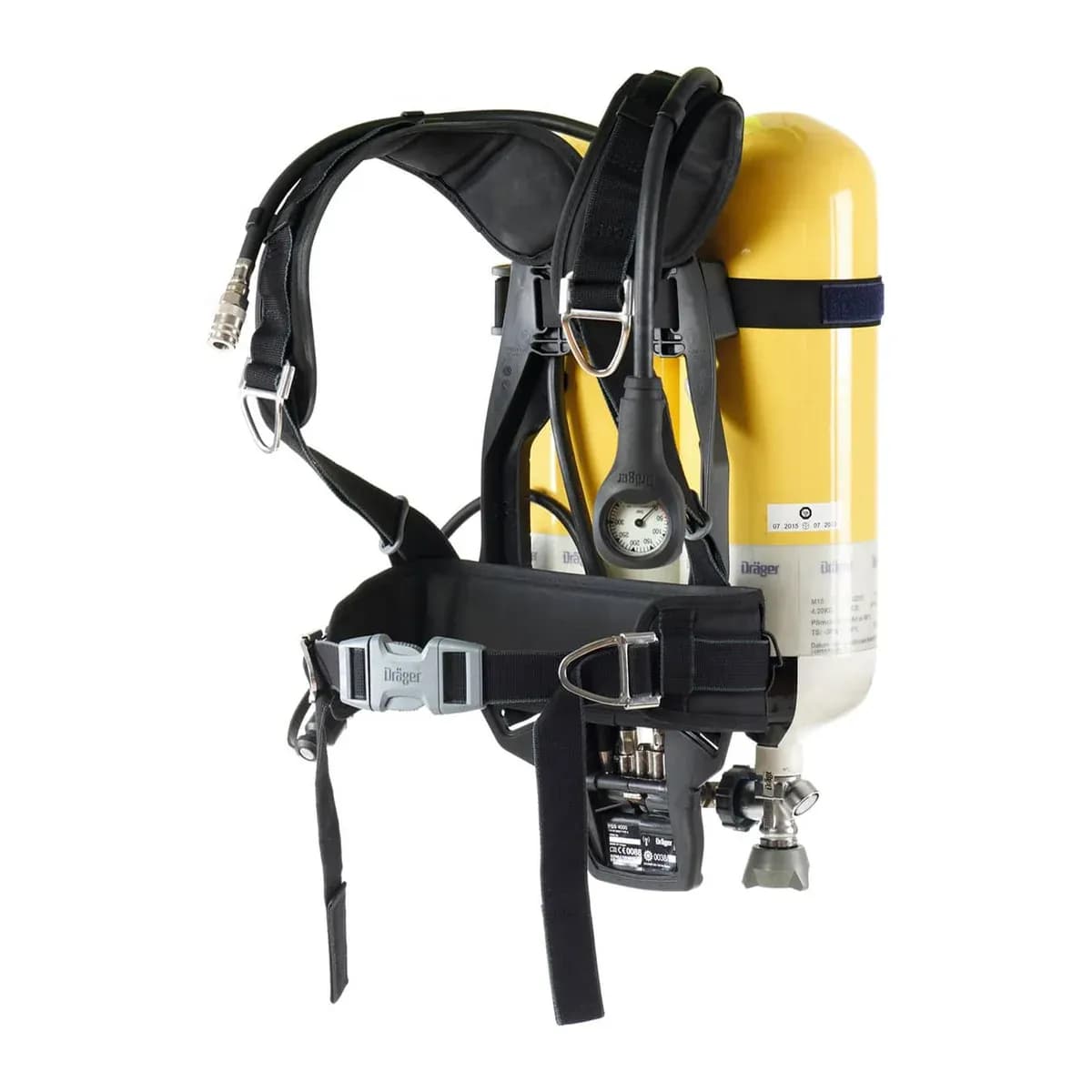
- EN 137Self-contained compressed air breathing apparatus: Type 1 industry, Type 2 firefighting
- EN 14594Continuous flow compressed air line apparatus
- EN 402 · EN 1146Escape breathing apparatus
- ISO 23269-1Emergency escape breathing devices on ships (EEBD)
Choosing respiratory protection starts with two questions: is there enough oxygen, and what is the contaminant? Filtering devices only clean the air; they do not supply oxygen. So before reading the filter codes, you need to know whether the environment is suitable for a filtering device at all.
How to read the diagrams
- Combined filter code: the letter shows the gas group and the digit next to it the capacity class. P3 after the dash is the particle filter. The example filter is tested against organic and inorganic gases, acid gases and ammonia combined.
- Colour bands: each gas group has a colour: A brown, B grey, E yellow, K green, P white. Mercury and nitrogen oxide filters have two-colour bands and a limited service time.
- Particle classes: for FFP masks, the class covers both filtration and total inward leakage. An FFP3 mask requires at least 99% filtration and at most 2% inward leakage. Reusable masks are marked R and single-shift masks NR.
- Selection order: first oxygen, then the type of contaminant, and finally the concentration and duration. In an environment that may lack oxygen, a filter is useless; breathing apparatus is needed. There is no work filter for carbon monoxide, only escape devices.
- Device standards: filtering facepieces, half and full face masks, filters, powered filtering systems and self-contained breathing apparatus are certified to separate standards. For full face masks in industry, at least class 2 is required.
With tight-fitting masks, protection depends on the mask sealing properly against the face. We explain why face-fit testing is needed in our HSE INDG479 article.
Short selection checklist
- Check whether oxygen deficiency is possible; if it is, choose breathing apparatus rather than a filtering device.
- Identify the contaminant: a P filter for dust, fume and mist; the matching letter for gas and vapour; a combined filter if both are present.
- Set the filter class and mask type (half or full face) according to the concentration and exposure time.
- Have users of tight-fitting masks face-fit tested.
- Plan filter changes and mask care according to the manufacturer's instructions for use.
This guide is for general information. For exact requirements and test methods, the current text of the standard and the product's instructions for use apply.
Frequently asked questions
What is the difference between FFP2 and FFP3?
Under EN 149, an FFP2 mask has at least 94% filtration and at most 8% total inward leakage. For an FFP3 mask these values are at least 99% and at most 2%. Which one is needed depends on the type and concentration of the contaminant.
What is the difference between an A2 and an A1 filter?
The digit is the capacity class. In EN 14387:2004+A1:2008, class 1 is for gas concentrations up to 0.1% by volume and class 2 up to 0.5%; the 2021 edition changed the test capacities. How long a filter lasts depends on the environment; set the change interval from the manufacturer's data.
Which filter is used for carbon monoxide?
There is no work filter for carbon monoxide, and a B filter does not protect against CO either. For CO there are only filtering escape devices (EN 403, EN 404). Working in an atmosphere containing CO requires breathing apparatus.
Sources
- Centexbel – FFP respiratory masks
- JSP – What do the colour bands on filters mean?
- JSP – Respiratory standards explained
- HSE – Types of RPE
- BSI – EN 14387 gas filters and combined filters
- EVS (Estonian Centre for Standardisation) – EVS-EN 14387:2021
- BSI – EN 404 filter self-rescuer from carbon monoxide
- BSI – EN 12941 powered filtering devices with helmet or hood
- EVS (Estonian Centre for Standardisation) – EVS-EN 14594:2018
- EVS (Estonian Centre for Standardisation) – EVS-EN 137:2006
- ISO – ISO/TS 16975 and ISO 23269-1
This article is compiled from these sources; for technical values and obligations, the current edition of the source applies.