Markings such as EN ISO 11612, EN ISO 20471 or Type 3 on protective clothing show which hazard the garment was tested against. This guide explains chemical coverall types, visibility classes and the codes for flame, welding, arc and static electricity with diagrams.
- EN ISO 13688General requirements: sizing, ergonomics, innocuousness, marking
- EN ISO 20471High visibility
- EN ISO 11612Heat and flame
- EN ISO 11611Welding and allied processes
- EN 1149-5Electrostatic properties
- IEC 61482-2Thermal hazards of an electric arc
- EN ISO 24232Protection against rain; replaced EN 343 in 2025
- EN 342Cold environments: −5 °C and below
- EN 14058Cool environments: above −5 °C
- EN 943-1Gas-tight chemical suit (Type 1)
- ETExtra requirements for emergency teams (EN 943-2)
- EN 14126Against infective agents
- EN 1073-2Against radioactive particulate contamination; not protection from radiation
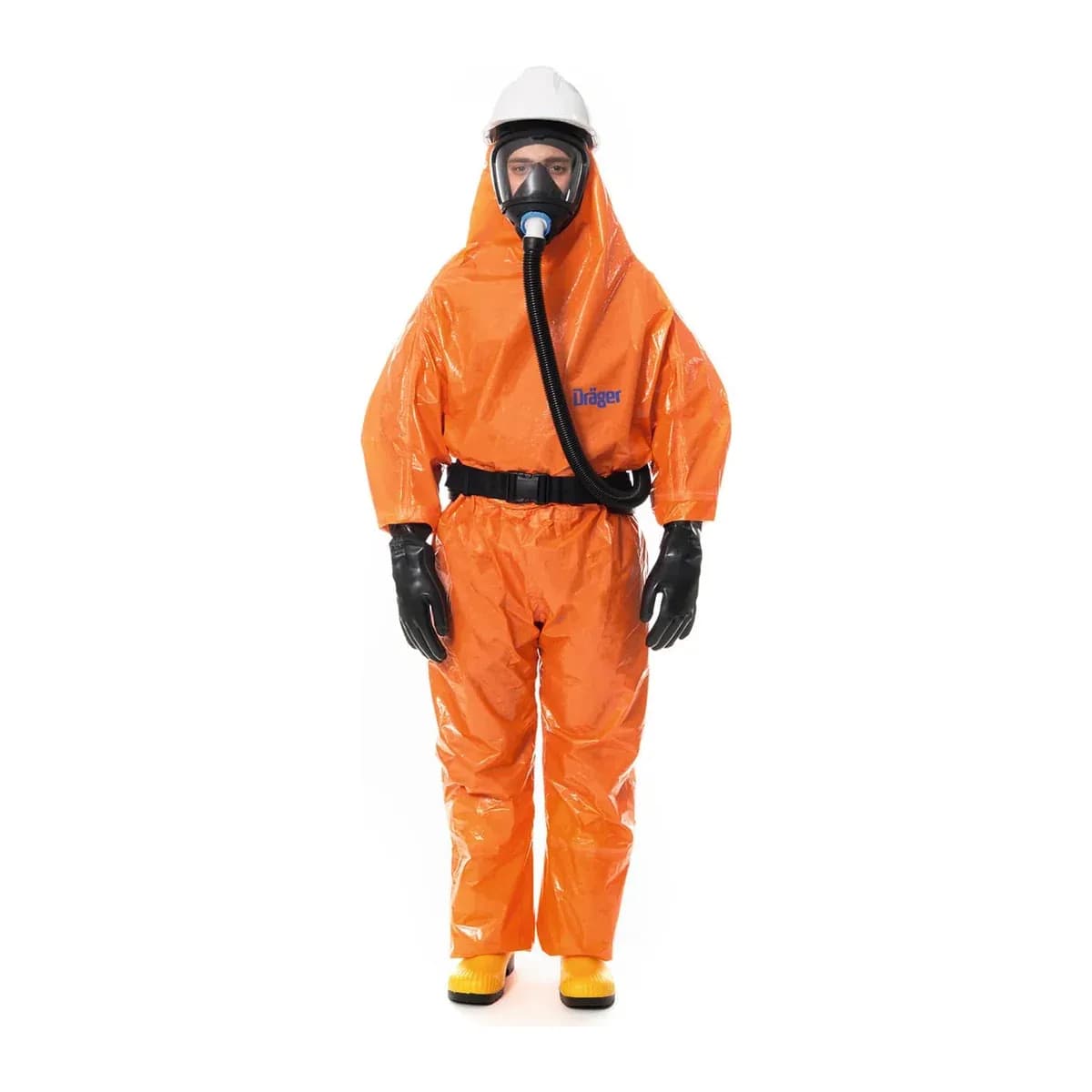
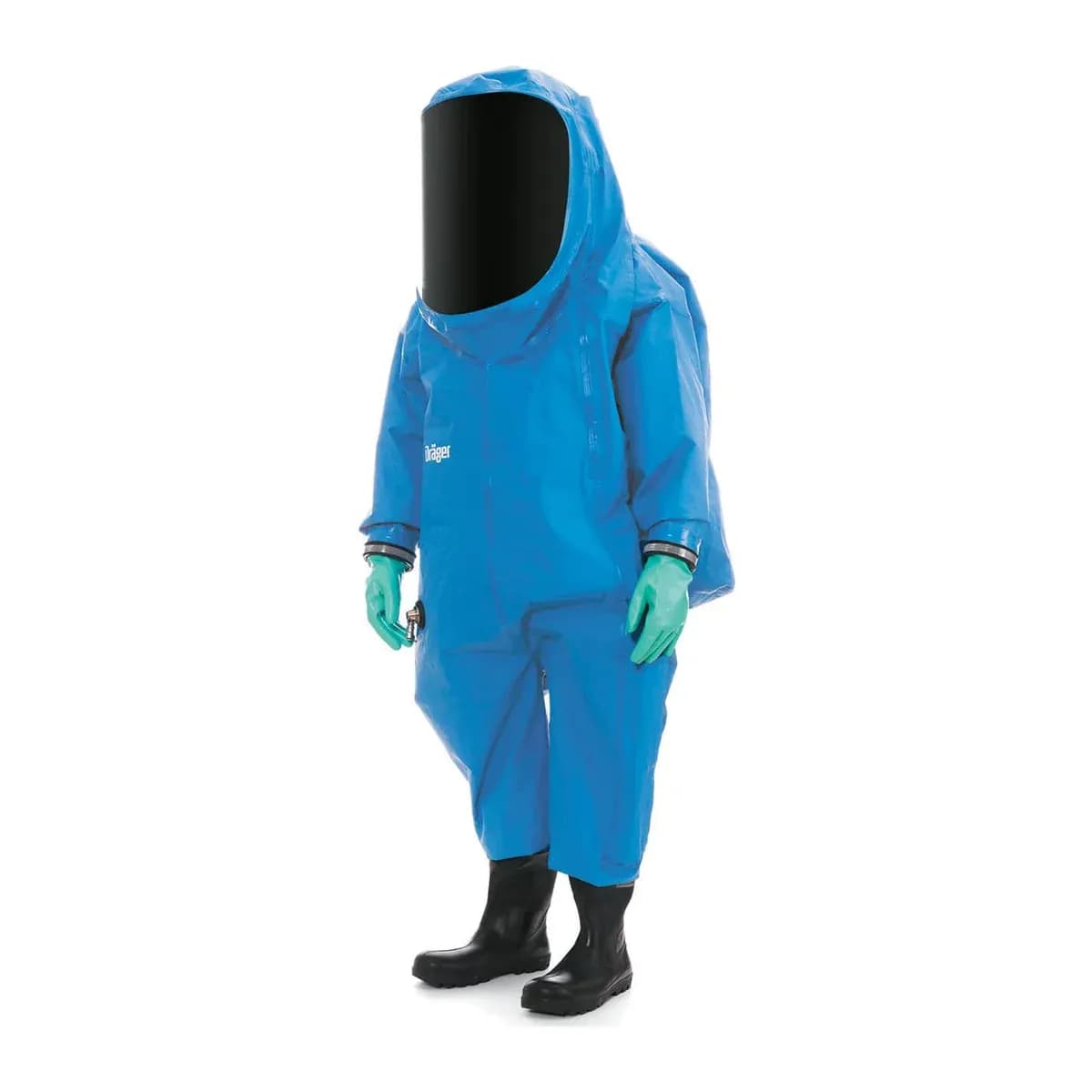 Example productDräger CPS 7900
The lower the type number, the higher the protection.
- 1Type 1: gas-tight (EN 943-1)
- 3Type 3: liquid jet tight (EN 14605)
- 4Type 4: spray tight (EN 14605)
- 5Type 5: airborne solid particles (EN ISO 13982-1)
- 6Type 6: limited liquid splash (EN 13034)
- PB [3]Partial body protection (apron, sleeves); [3], [4] or [6]
- 4-BSuffix “-B”: against infective agents to EN 14126
Type 2 (non-gas-tight with external air supply) was removed by EN 943-1:2015.
| Class | 1 | 2 | 3 |
|---|---|---|---|
| Fluorescent background material, min. | 0.14 m² | 0.50 m² | 0.80 m² |
| Retroreflective material, min. | 0.10 m² | 0.13 m² | 0.20 m² |
The background colour may be fluorescent yellow, fluorescent orange-red or fluorescent red. Class 3 is the highest visibility.
The letter is the type of heat, the digit the performance level. A1 or A2 plus at least one other code is required; which ones depends on the job.
- A1Limited flame spread, surface ignition
- A2Limited flame spread, edge ignition
- B1–B3Convective heat
- C1–C4Radiant heat
- D1–D3Molten aluminium splash: 100, 200, 350 g
- E1–E3Molten iron splash: 60, 120, 200 g
- F1–F3Contact heat: 5, 10, 15 s
- 11611 · 1Welding class 1: at least 15 molten drops; low-spatter work
- 11611 · 2Welding class 2: at least 25 drops; MAG welding, overhead and confined spaces
- APC 1Arc class 1: 4 kA in the box test
- APC 2Arc class 2: 7 kA in the box test
- ATPV · EBTEnergy rating from the open arc test, cal/cm²; higher protects better
- ELIMHighest energy in the open arc test with no burn risk in any measurement, cal/cm²
An EN 1149-5 garment is not enough on its own: the wearer must be earthed (resistance below 10⁸ Ω). Gloves and footwear are outside this standard.
No single standard for protective clothing covers every hazard. Each standard looks at one specific hazard: flame, welding spatter, chemicals, visibility, rain or cold. All protective garments first meet the general requirements of EN ISO 13688; they are then certified to one or more standards depending on the risk.
How to read the diagrams
- Hazard and standard: the first diagram shows which standard covers which hazard. For rainwear, EN ISO 24232 replaced EN 343 in 2025.
- Chemical suit label: the example is a gas-tight Type 1 suit that also meets additional standards for emergency teams, infective agents and radioactive particle contamination. EN 1073-2 does not protect against the radiation itself.
- Chemical types: the lower the type number, the higher the protection: Type 1 is gas-tight, Type 6 protects only against limited splashes. The suffix "-B" shows a test against infective agents, and PB a garment that protects only part of the body.
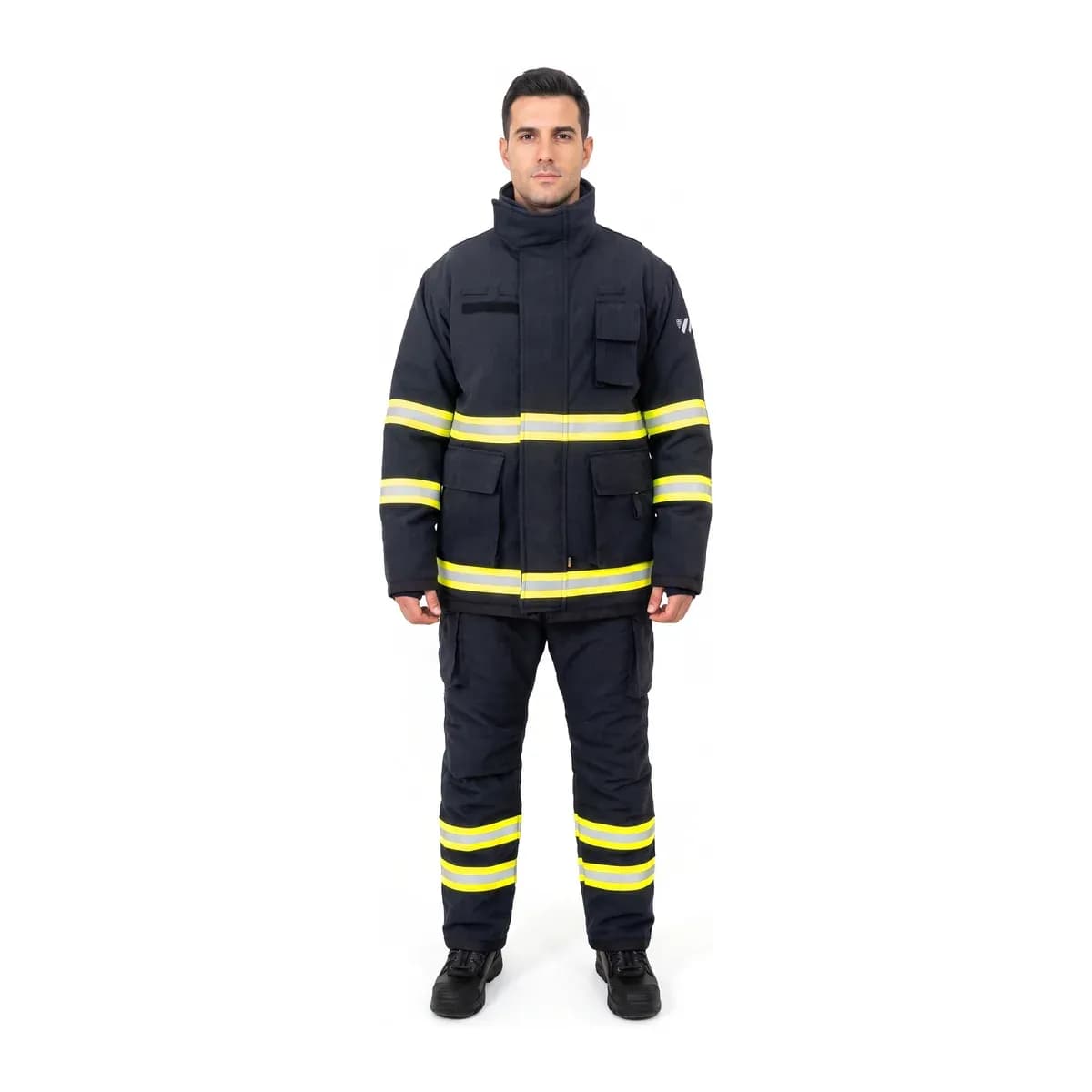
- Visibility classes: in EN ISO 20471, the class is set by the area of fluorescent background material and retroreflective tape. Class 3 is the highest visibility.
- Flame and heat codes: in EN ISO 11612, the letter shows the type of heat and the digit the performance level. A1 or A2 must be combined with at least one other code.
- Welding, arc and static electricity: in EN ISO 11611, class 2 is for more demanding welding work. Arc protection is given as an APC class or as ATPV, EBT and ELIM values. An EN 1149-5 garment is not enough on its own; the wearer must also be earthed.
Short selection checklist
- In the risk assessment, list every hazard that can affect the clothing: heat, flame, welding, arc, chemicals, traffic and weather.
- For chemical risks, choose the type according to the form of the chemical (gas, pressurised jet, spray, dust, splash) and ask the manufacturer for test data against the chemical you use.
- In areas with vehicle and machinery traffic, set the EN ISO 20471 class from the risk assessment.
- In explosive atmospheres, plan earthing of the wearer alongside the EN 1149-5 garment.
- If there are several hazards, choose a garment certified for each of them; follow the washing and care instructions.
This guide is for general information. For exact requirements and test methods, the current text of the standard and the product's instructions for use apply.
Frequently asked questions
Do Type 5 and Type 6 coveralls protect against liquid chemicals?
Type 5 is tested against airborne solid particles, Type 6 only against limited liquid splashes. A liquid spray requires Type 4, and a pressurised liquid jet Type 3. Check separately in the manufacturer's test data whether the coverall resists the chemical you use.
How is the EN ISO 20471 class chosen?
The class shows the amount of fluorescent background material and retroreflective tape on the garment; class 1 requires the least area and class 3 the most. Which class is needed is set in the risk assessment, based on the traffic and visibility conditions in the work area.
Is an EN 1149-5 garment enough on its own?
No. For the electrostatic charge on the garment to dissipate, the person wearing it must also be earthed (resistance below 10⁸ Ω). The standard does not cover gloves or footwear.
Sources
- Centexbel – High-visibility clothing according to EN ISO 20471
- SIS – SS-EN 343:2019
- EVS (Estonian Centre for Standardisation) – EVS-EN ISO 13688:2013+A1:2021
- EVS (Estonian Centre for Standardisation) – EVS-EN 1149-5:2018
- EVS (Estonian Centre for Standardisation) – EVS-EN 14058:2017
This article is compiled from these sources; for technical values and obligations, the current edition of the source applies.