Markings such as EN 397, −30 °C, 440 V or LD inside a safety helmet show which tests it passed and which extra conditions it withstands. This guide explains helmet markings, the differences between the 2012 and 2025 editions of EN 397 and the other head protection standards with diagrams.
- EN 397Industrial safety helmet (2012 edition)
- −30 °CImpact and penetration at very low temperature
- +150 °CImpact and penetration at very high temperature
- 440 VInsulation against brief accidental contact with 440 V AC
- LDLateral deformation
- MMMolten metal splash
This helmet also carries EN 50365 class 0. 440 V and LD are optional requirements of EN 397:2012; they were removed in the 2025 edition.
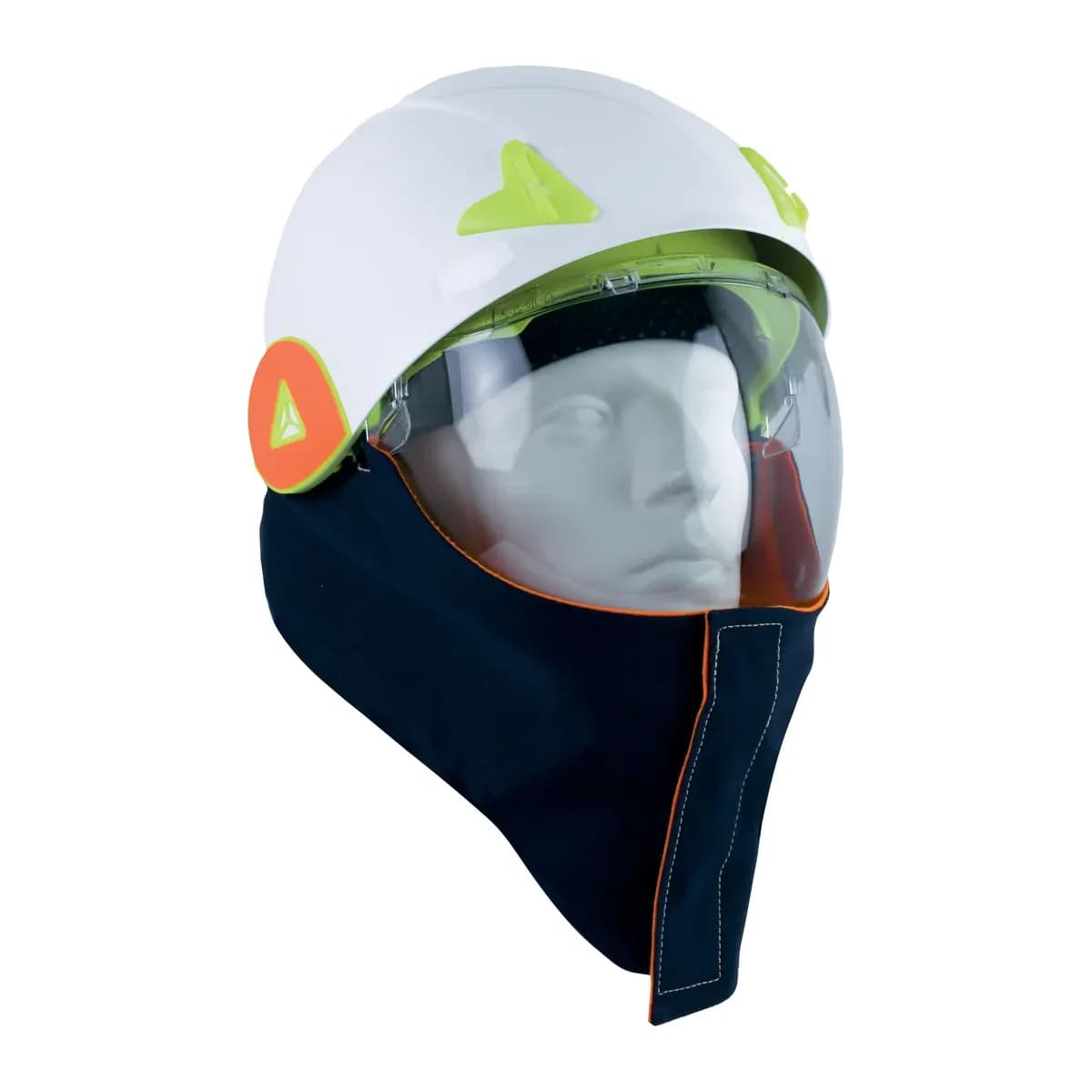
 Example productDelta Plus SUPER QUARTZ
- 49 JShock absorption: 5 kg mass from 1 m; at most 5 kN transmitted
- 3 kgPenetration: pointed 3 kg striker from 1 m; it must not reach the head
- 150–250 NA chin strap, if fitted, releases within this force range; against strangulation
The shell also passes a flame test: it stops burning within 5 seconds after the flame is removed.
| Requirement | 2012 | 2025 · Type 1 | 2025 · Type 2 |
|---|---|---|---|
| Crown impact | 49 J | 49 J | 98 J |
| Off-crown impact (side, front, back) | No | No | 24.5 J |
| Chin strap mandatory | No | No | Yes |
| 440 V AC option | Yes | No | No |
| LD option | Yes | No | No |
For Type 2 at most 10 kN may be transmitted and the chin strap releases above 500 N. Electrical insulation is now only certified under EN 50365:2023. EN 397:2025 was harmonised by decision 2026/1279; the 2012 reference is withdrawn on 16.12.2027. Helmets certified to 2012 may be sold until the certificate expires. More in our EN 397:2025 article.
- EN 397Industrial safety helmets: against falling objects
- EN 12492:2025Mountaineering and rope access helmets: the chin strap holds at 500 N so the helmet stays on in a fall
- EN 14052High-performance industrial helmets: higher impact energy
- EN 812Bump caps: only against bumping into hard objects; no protection from falling objects
- EN 50365Electrically insulating helmets for low and medium voltage installations; must also meet EN 397
The shell or the inside of a safety helmet carries markings that show the standard and any optional tests. They tell you whether the helmet was tested against falling objects, only against bumps on hard surfaces, or additionally against electricity, extreme temperatures or molten metal.
How to read the diagrams
- Helmet marking: the example helmet carries markings for low and high temperature tests, 440 V, LD and MM alongside EN 397. These are optional tests; if a marking is missing, the helmet was not tested for that condition.
- Basic tests: in EN 397:2012, shock absorption is tested at 49 J and penetration resistance with a pointed 3 kg mass. If there is a chin strap, it releases at a set force to reduce the risk of strangulation.
- 2012 and 2025 compared: EN 397:2025 divides helmets into Type 1 and Type 2. Type 2 is tested against a higher crown impact and against impacts from the side, front and back, and the chin strap is mandatory. The 440 V and LD options are no longer in the new edition; for electrical insulation, look for EN 50365. Details in our EN 397:2025 article.
- Other standards: helmets for rope access and climbing fall under EN 12492, high-performance industrial helmets under EN 14052, and bump caps under EN 812. A bump cap does not protect against falling objects.
Short selection checklist
- If there is a risk of falling objects, choose at least an EN 397 helmet; if the only risk is bumping into low ceilings or projections, an EN 812 bump cap may be enough.
- For work at height, or where the helmet must stay on during a fall, consider EN 12492 or EN 397:2025 Type 2 helmets.
- In very cold or hot environments, at electrical installations or near molten metal, check that the helmet carries the relevant marking.
- If earmuffs, visors or lamps will be fitted, confirm from the manufacturer's list that they are compatible with the helmet.
- Check the helmet's date of manufacture and the service life given by the manufacturer; do not use a helmet that has taken an impact.
This guide is for general information. For exact requirements and test methods, the current text of the standard and the product's instructions for use apply.
Frequently asked questions
What is the difference between a safety helmet and a bump cap?
A bump cap is tested under EN 812 only against bumping into a hard surface and does not protect against falling objects. Where there is a risk of falling objects, an EN 397 helmet or a higher-performance helmet is needed.
What replaced the helmet marked 440 V?
The 440 V option was removed in EN 397:2025. For work that requires electrical insulation, look for a helmet certified to EN 50365:2023; these helmets must also meet the EN 397 requirements.
Can helmets certified to EN 397:2012 still be sold?
EN 397:2025 was harmonised by Decision 2026/1279, and the reference to the 2012 edition ends on 16.12.2027. Helmets certified to the 2012 edition can be sold until their certificate expires.
Sources
- SATRA – EN 397 industrial safety helmets
- DGUV – FAQ head protection
- EVS (Estonian Centre for Standardisation) – EVS-EN 812:2012
- Eurofins – PPE monthly bulletin, July 2026
- Commission Implementing Decision (EU) 2026/1279 (umwelt-online)
This article is compiled from these sources; for technical values and obligations, the current edition of the source applies.