Markings such as 2C-1.2 1 FT KN on a lens show the filter type, optical class, impact resistance and surface properties. This guide explains EN 166 markings, impact classes, filter codes and the move to EN ISO 16321 with diagrams.
Under EN 166 the lens shows, in order, the filter code and shade, the maker’s mark, the optical class and the strength letters.
- 2C-1.2UV filter with good colour recognition (EN 170); shade 1.2 = clear
- 1Optical class 1: continuous wear
- FLow-energy impact, 45 m/s
- TImpact test also passed at −5 °C and +55 °C
- KResists surface damage by fine particles
- NAnti-fog
The frame carries EN 166 and FT as well. If lens and frame differ in impact class, the lower one applies to the whole protector.
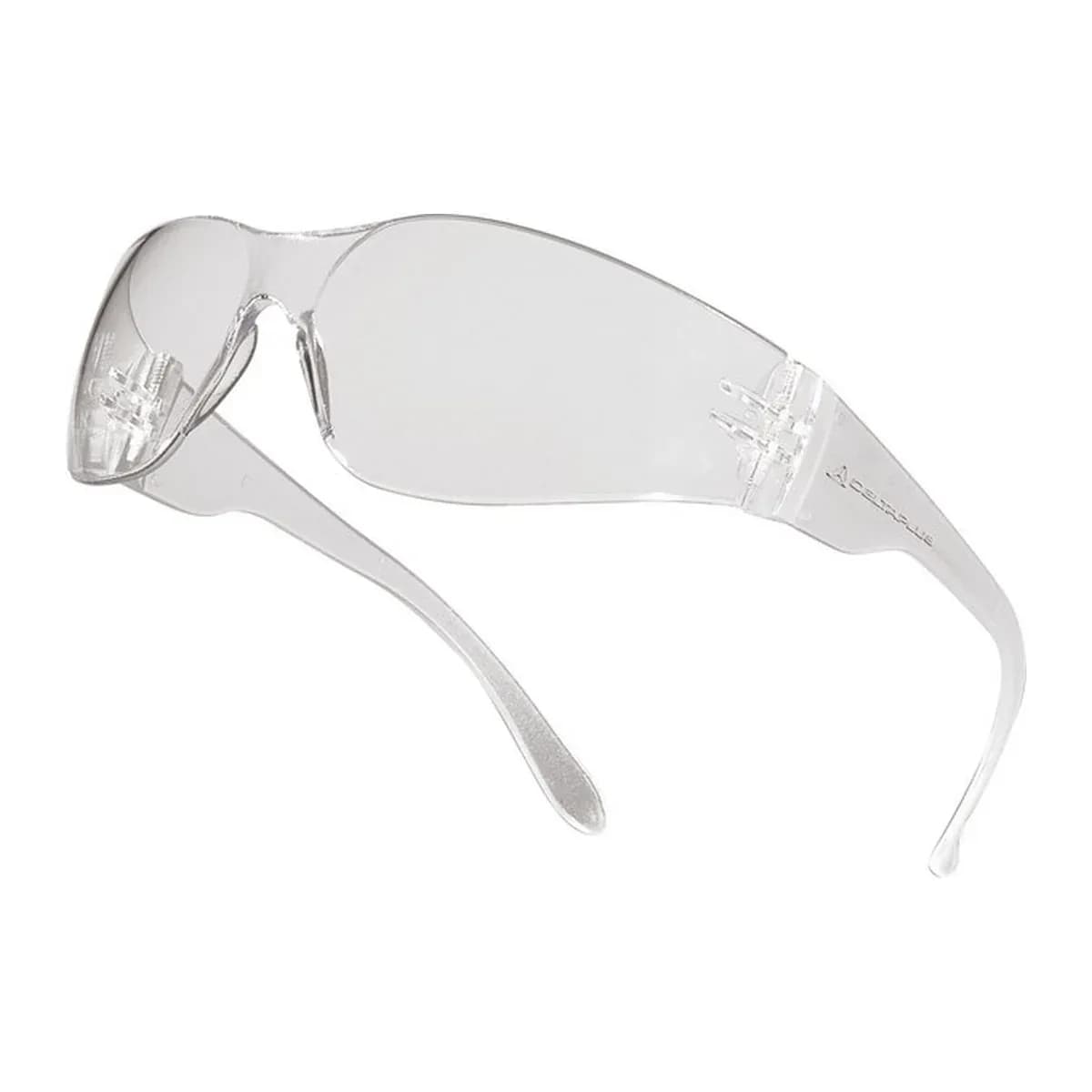
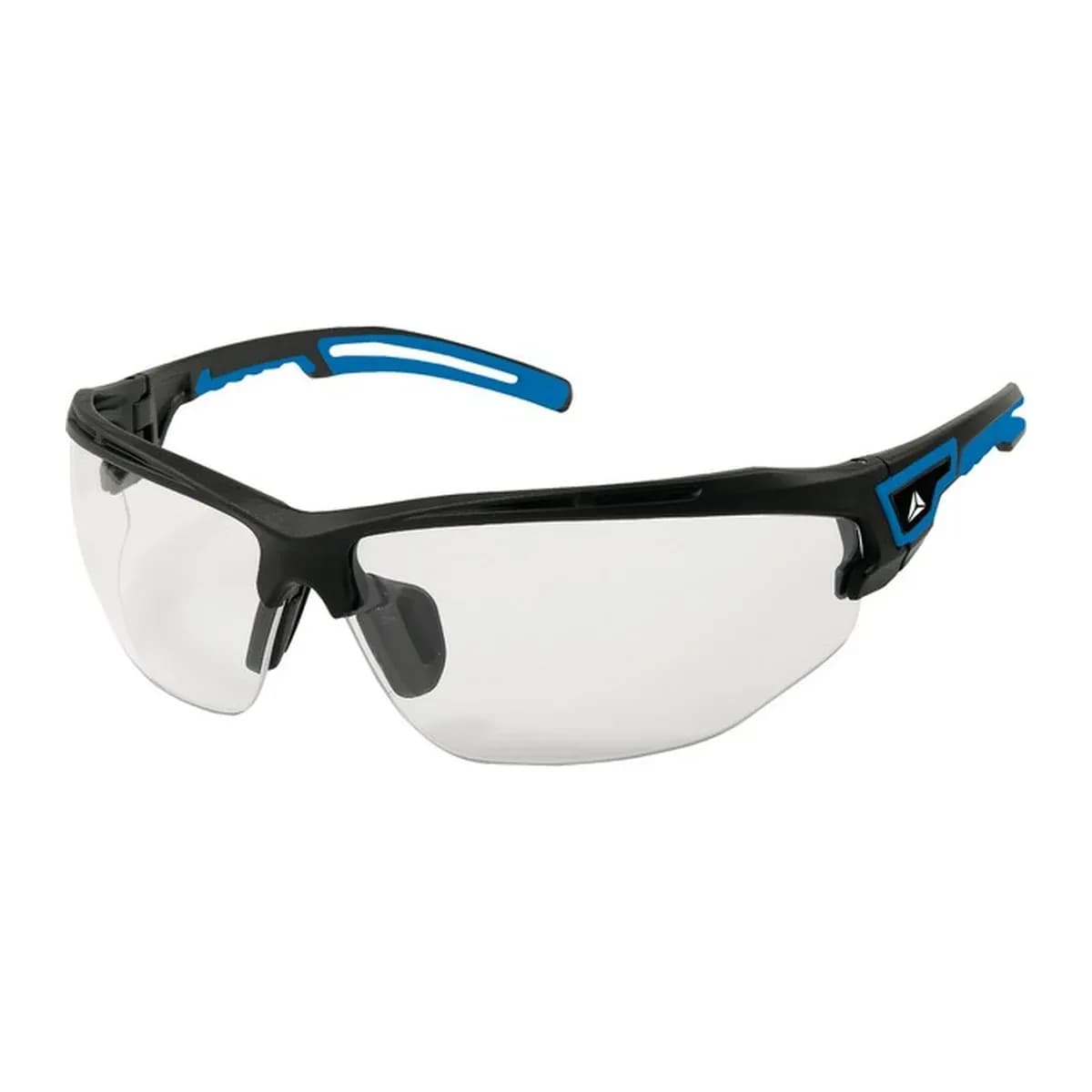 Example productDelta Plus ASO2 CLEAR
S: 22 mm, 43 g steel ball. F, B and A: 6 mm, 0.86 g ball; speed rises from F to A.
Spectacles can reach F at most, goggles B, face shields A.
- 3Liquid droplets and splashes
- 4Large dust particles (> 5 µm)
- 5Gas and fine dust (< 5 µm)
- 8Short-circuit electric arc
- 9Molten metal and hot solids
- HFor small head sizes
The filter code is followed by a shade number after a hyphen; the higher the shade, the darker the lens.
- 2UV filter; colour perception may be affected (EN 170)
- 2C · 3UV filter, good colour recognition (EN 170)
- 4Infrared filter (EN 171)
- 5Sunglare filter, no IR requirement (EN 172)
- 6Sunglare filter with IR requirement (EN 172)
- 1.2 – 16Welding filter: no code number, shade only (EN 169)
- EN 379Automatic welding filter
- 2023/941EN ISO 16321-1/-2/-3 added to the list of harmonised standards
- 11.11.2025EN 166 no longer gives presumption of conformity (date set by 2024/2599)
- EN 166Certified products may be sold until the certificate expires (max. 5 years)
- 2026/1279Current list: 16321-1:2022, -2:2021, -3:2022; EN 166 is not listed
EN ISO 16321-1 covers general requirements, -2 welding and related techniques, -3 mesh protectors. See our EN ISO 16321 article for details.
Safety eyewear carries markings in two places: on the lens and on the frame. The lens marking shows the filter type, optical quality and resistance; the frame marking shows the standard and the frame's impact class. If the lens and frame have different impact classes, the lower one applies to the eyewear as a whole.
How to read the diagrams
- Lens marking: the filter code and shade come first, then the manufacturer's mark, the optical class and the strength letters. In the example, 2C-1.2 is a clear UV filter with good colour recognition, 1 is the optical class for continuous use, F is low-energy impact and T shows that this impact test was also passed at −5 °C and +55 °C. K stands for scratch resistance and N for anti-fog.
- Impact resistance: from S to A, the speed of the ball and the impact energy increase. Spectacles can reach F at most, goggles B and face shields A.
- Field-of-use codes: 3, 4, 5, 8 and 9 cover specific risks such as liquids, coarse dust, gas and fine dust, electric arcs and molten metal. H marks a model for small head sizes.
- Filter codes: the code shows whether the filter is for UV, infrared or sunlight, and the shade number after the dash gives how dark the lens is. Welding filters have no code number; only the shade is marked.
- New standard: EN ISO 16321 is replacing EN 166. Products certified to EN 166 can be sold until their certificate expires. We explain the transition in detail in our EN ISO 16321 article.
Short selection checklist
- Identify the risk: flying particles, dust, chemical splashes, UV or welding light, molten metal.
- Choose the impact class according to the energy of flying particles; high energy calls for goggles or a face shield.
- If there is a risk from liquids, dust or gas, look for the matching field-of-use code on the frame.
- Near welding and other strong light sources, set the filter type and shade according to the task.
- For eyewear worn for long periods, prefer optical class 1; where fogging is a problem, look for the N marking.
This guide is for general information. For exact requirements and test methods, the current text of the standard and the product's instructions for use apply.
Frequently asked questions
What does the optical class mean?
The optical class shows how little the lens distorts the image. Class 1 is for continuous use; classes 2 and 3 are suitable for shorter periods of use.
What does the FT marking mean?
F shows resistance to a low-energy impact from a small steel ball travelling at 45 metres per second. If T is added, the same test was also passed at −5 °C and +55 °C. The impact class is marked separately on the lens and the frame; if they differ, the lower one applies.
Can eyewear marked EN 166 still be sold?
EN 166 no longer gives a presumption of conformity from 11.11.2025. Products certified to EN 166 before that date can be sold until their certificate (valid for at most 5 years) expires.
Sources
- BSI – A new era in eye protection: understanding EN ISO 16321
- Delta Plus – Eye protection: a new, more stringent international standard EN ISO 16321 · 2025-07-18
This article is compiled from these sources; for technical values and obligations, the current edition of the source applies.