Codes such as S1P, S3S, SR or WR on a safety shoe show which standard it was tested to, how the toes are protected, how it resists puncture and water, and which slip test it passed. This guide explains the EN ISO 20345:2022 codes with diagrams.
The tongue label carries the standard, the safety class and any extra codes. Example: S3S · SR · HRO.
- S3SClass S3; trailing S: non-metal insert tested with the 3.0 mm nail (PS)
- SRSlip resistance: ceramic tile + glycerine test
- HROOutsole resists 300 °C hot contact
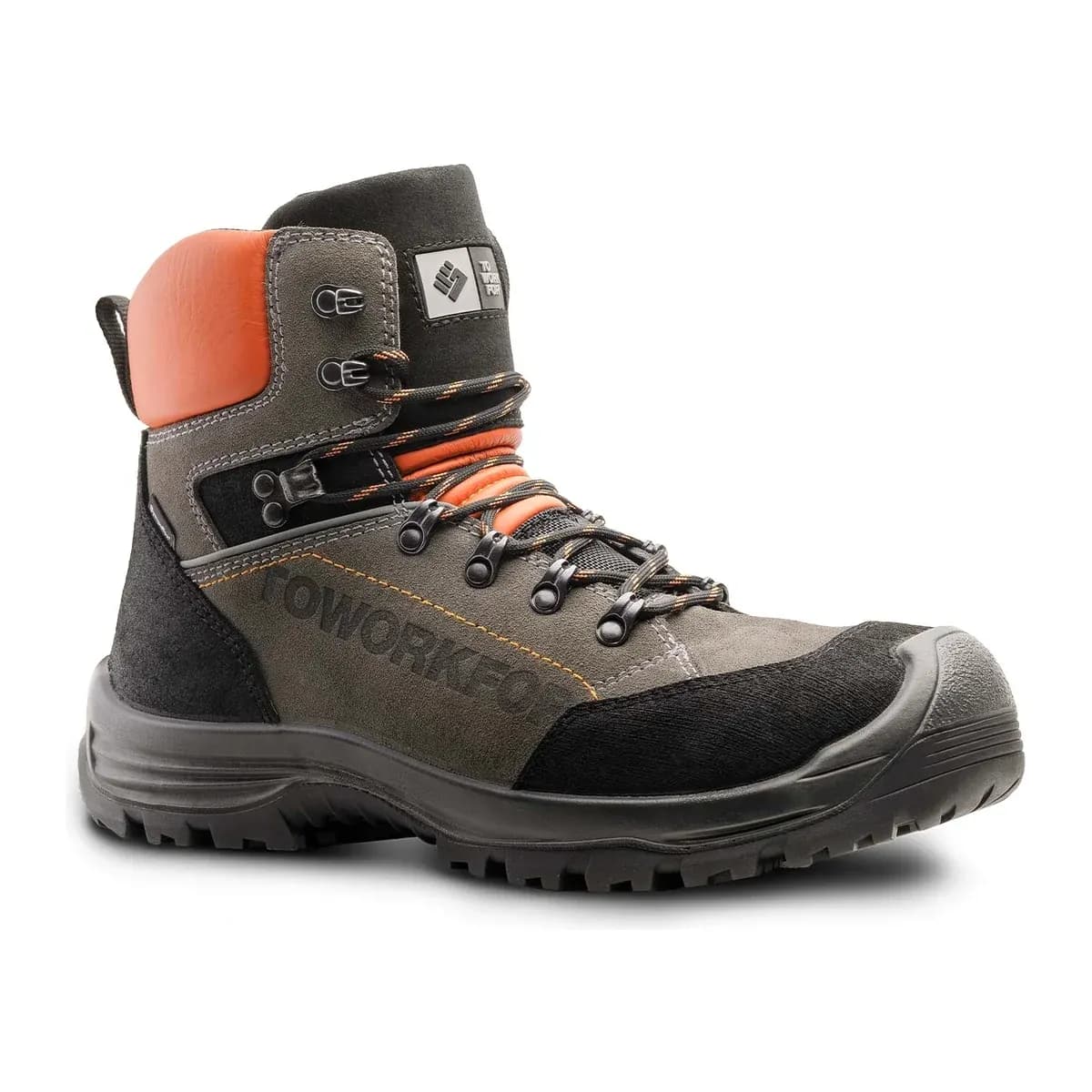
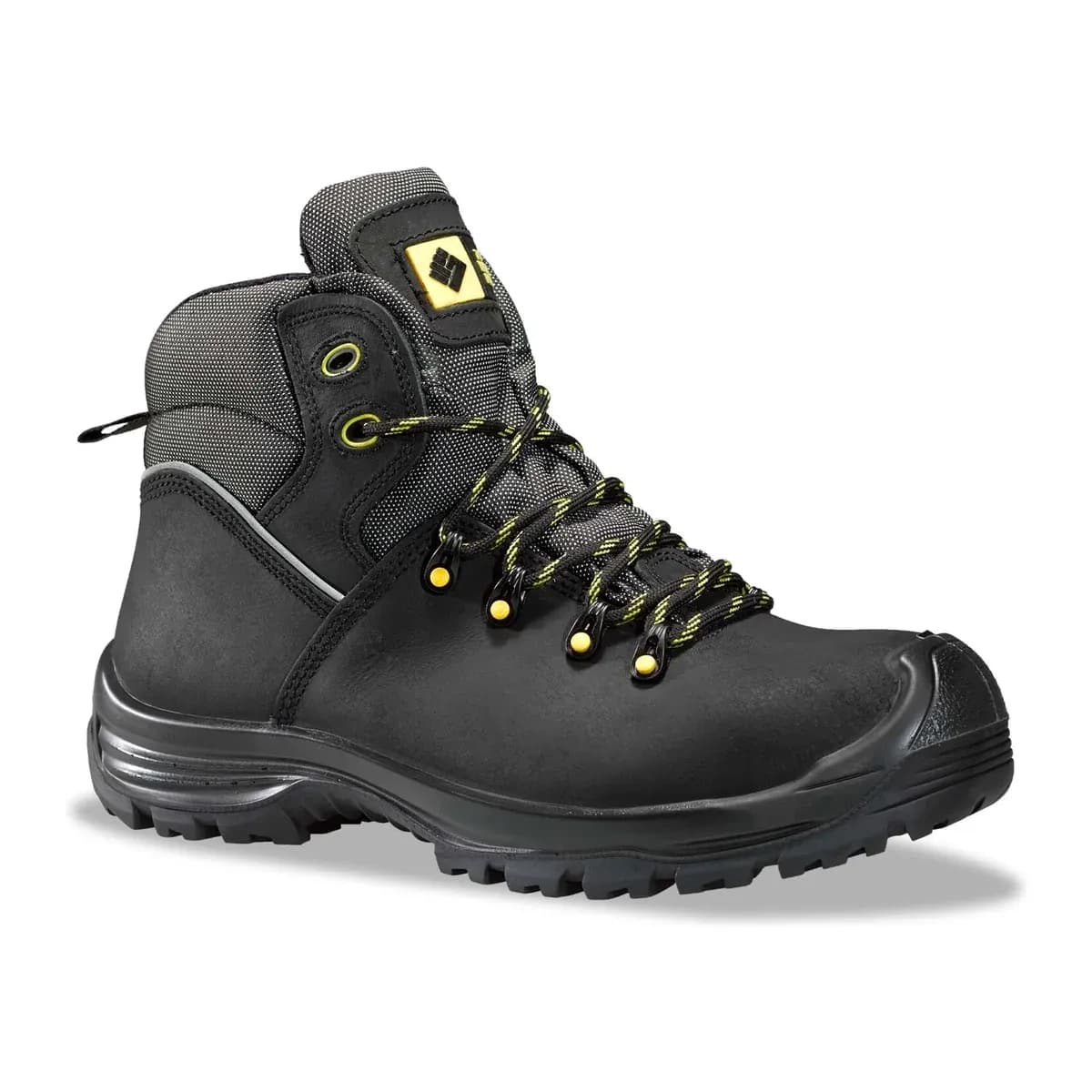 Example productTOWORKFOR Nurburgring
The toe cap rating decides which standard applies. The first letter of the class name shows it.
- EN ISO 20345Safety footwear. Toe cap 200 J impact, 15 kN compression. Classes SB, S1 … S7
- EN ISO 20346Protective footwear. Toe cap 100 J. Classes PB, P1 …
- EN ISO 20347Occupational footwear. No toe cap. Classes OB, O1 …
Each class adds features to the one before. The table follows EN ISO 20345:2022.
| Feature | SB | S1 | S2 | S3 | S4 | S5 | S6 | S7 |
|---|---|---|---|---|---|---|---|---|
| 200 J toe cap | Yes | Yes | Yes | Yes | Yes | Yes | Yes | Yes |
| Closed heel area | No | Yes | Yes | Yes | Yes | Yes | Yes | Yes |
| A · antistatic | No | Yes | Yes | Yes | Yes | Yes | Yes | Yes |
| E · heel energy absorption | No | Yes | Yes | Yes | Yes | Yes | Yes | Yes |
| WPA · water-resistant upper | No | No | Yes | Yes | — | — | Yes | Yes |
| Perforation resistance | No | No | No | Yes | No | Yes | No | Yes |
| Cleated outsole | No | No | No | Yes | No | Yes | No | Yes |
| WR · whole shoe water-resistant | No | No | No | No | — | — | Yes | Yes |
| Material class | I / II | I | I | I | II | II | I | I |
Class I: leather and similar. Class II: all rubber or all polymer (boots); waterproof by construction, so WPA and WR do not apply (—). In the 2022 edition FO (fuel-resistant outsole) is no longer part of the classes; it is marked separately.
- PMetal insert, 4.5 mm nail
- PLNon-metal insert, 4.5 mm nail
- PSNon-metal insert, 3.0 mm nail (stricter test)
All three tests require at least 1100 N. For S3, S5 and S7 the type is appended to the class: S3L = PL, S3S = PS; no suffix means a metal insert.
- —Basic test: ceramic tile + detergent solution. Mandatory, not marked
- SRExtra test: ceramic tile + glycerine
- ØSlip test not possible (e.g. spiked soles)
The 2011 markings SRA, SRB and SRC are gone. The steel + glycerine test was removed.
- FOFuel-oil resistant outsole
- WPAWater-resistant upper
- WRWhole shoe water-resistant
- HROOutsole 300 °C hot contact
- HIHeat insulation (150 °C)
- CICold insulation (−20 °C)
- MMetatarsal protection
- ANAnkle protection
- CRCut-resistant upper
- CConductive footwear
- SCToe scuff protection
- LGLadder grip
There is no “I” code in the 2022 edition. For electrically insulating footwear look for EN 50321-1 certification.
The short codes on the tongue or label of a safety shoe summarise the tests it has passed. Read them in order: first the main standard, then the safety class (SB, S1, S3 and so on), and finally the additional codes. The diagrams above follow EN ISO 20345:2022 and its sister standards in that order.
How to read the diagrams
- Label example: in the marking S3S · SR · HRO, the first code gives the safety class and the type of penetration-resistant insert; the codes after it show extras such as slip resistance and an outsole that resists hot contact.
- Three standards: shoes whose toecap withstands a 200 J impact fall under EN ISO 20345, those rated for 100 J under EN ISO 20346. Occupational shoes without a toecap fall under EN ISO 20347. The letter S, P or O in the class name shows this split.
- Class table: from SB to S7, each class adds properties to the previous one. S6 and S7 were added in the 2022 edition; S7 is S3 with water resistance of the whole shoe (WR) added.
- Penetration-resistant insert: P stands for a metal insert, PL and PS for non-metal inserts. PS is tested with a thinner nail (3.0 mm). The last letter in names such as S3L and S3S gives this type; with no letter, the insert is metal.
- Slip resistance: the basic slip test is now mandatory for every shoe and is not marked separately. SR shows that the shoe also passed the additional test on a glycerine-covered floor. The old SRA, SRB and SRC codes were removed in the 2022 edition.
- Additional codes: codes such as FO, WPA, WR, HRO, HI, CI, M, AN and CR show extra protection against a specific risk.
Short selection checklist
- In the risk assessment, list the risks to the feet: impact, crushing, puncture, slipping, water and temperature.
- If toe protection is needed, choose a model certified to EN ISO 20345 and set the safety class according to these risks.
- If there is a risk from nails or sharp parts, choose a class with a penetration-resistant insert (S1P, S3, S5, S7) and check the insert type.
- On wet or oily floors, look for the SR marking; for very cold or hot environments check for CI and HI, and for water look for WR.
- For live electrical work a safety shoe is not enough; you need insulating footwear certified to EN 50321-1.
This guide is for general information. For exact requirements and test methods, the current text of the standard and the product's instructions for use apply.
Frequently asked questions
What is the difference between S3 and S3S?
Both are the same safety class. The difference is the type of penetration-resistant insert: S3 has a metal insert (P), S3L a non-metal PL insert, and S3S a non-metal PS insert tested with a thinner nail.
Why is the SRC marking no longer used?
EN ISO 20345:2022 reorganised the slip tests. The basic test became mandatory for every shoe and is not marked separately; shoes that pass the additional glycerine test are marked SR. The SRA, SRB and SRC codes belong to the 2011 edition and can still appear on products certified to it.
Which footwear is needed for electrical work?
EN ISO 20345:2022 has no code for insulating footwear. For live working, look for insulating footwear certified to EN 50321-1. Antistatic footwear does not replace insulating footwear.
Sources
- EVS (Estonian Centre for Standardisation) – EVS-EN ISO 20345:2022
- EVS (Estonian Centre for Standardisation) – EVS-EN ISO 20346:2022
This article is compiled from these sources; for technical values and obligations, the current edition of the source applies.